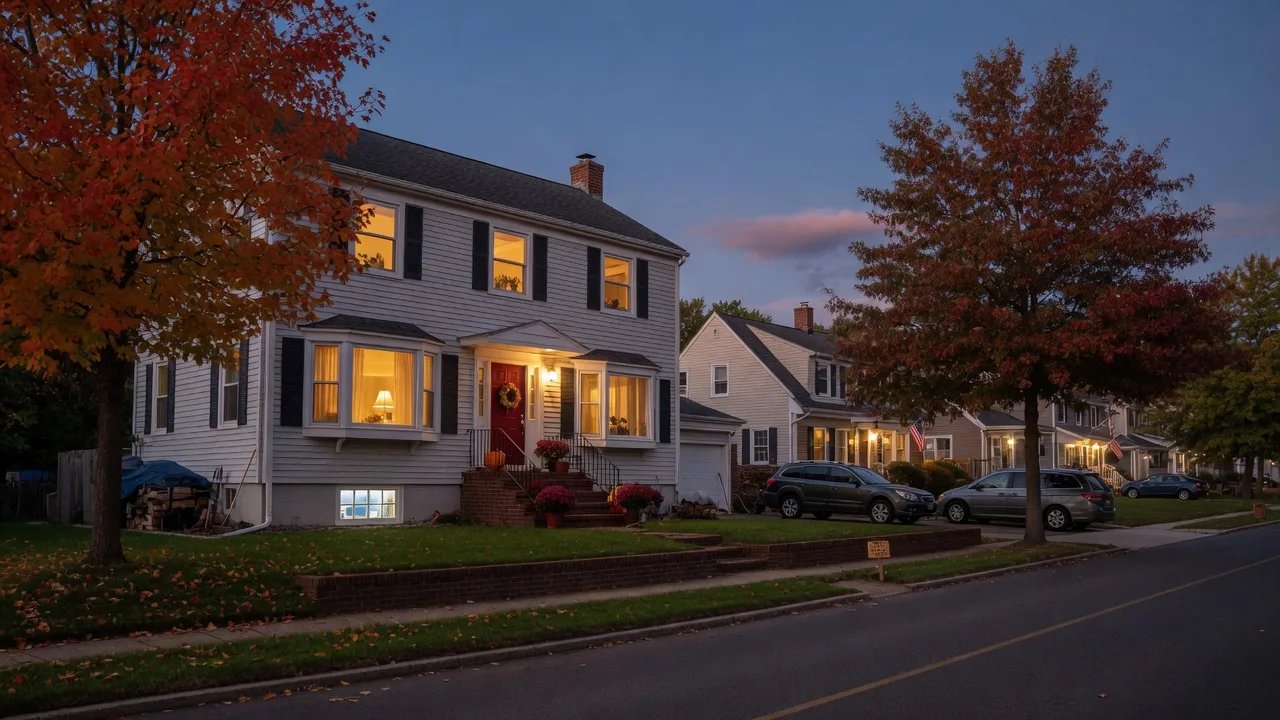
Mount Laurel homes are some of the most family-friendly in Burlington County, but comfortable neighborhoods still hide risks you cannot see: radon gas in basements, aging smoke alarms, and carbon monoxide from a furnace you have trusted for years. This checklist covers the checks that matter most, from radon levels common in the 08054 area to the New Jersey detector rules that apply before you sell.
You do not need to be handy to knock out most of these. A Saturday morning, a few new batteries, and one radon test kit cover the highest priorities. If you are newer to the area and still learning which neighborhoods have older homes and which have newer builds, our Mount Laurel neighborhood guide is a good place to start.
4.0 pCi/L
EPA Radon Action Level
~4.7
Avg Mount Laurel Radon Test (pCi/L)
10 Years
Max Age for Smoke & CO Alarms
1 in 10
NJ Radon Tests Hit the Action Level
Why Home Safety Checks Matter in Mount Laurel
Mount Laurel's housing stock spans every decade since the 1950s. The mid-century ranches in Southgate and the Country Club section, the classic colonials of Ramblewood, and the newer construction near Springdale and Holly Hills all age differently, and each generation of home has its own safety quirks. Older basements are more likely to let soil gases seep in, and every home in town, whatever its age, depends on detectors that quietly expire after a decade.
The good news is that most safety problems here are preventable and cheap to address. Radon has a reliable fix, detector requirements are straightforward, and winter emergencies mostly come down to a little planning. When the day comes to sell, a Mount Laurel home that has passed the township's alarm inspection and tested clean for radon moves through the process far more smoothly. Our Mount Laurel real estate data page shows what homes in your neighborhood are worth if you are weighing upgrades.
Is Radon a Concern in Mount Laurel and Burlington County?
Yes, and it is the single most important test a Mount Laurel homeowner can run. The EPA classifies Burlington County as Radon Zone 2 with moderate potential, but that is only a screening estimate. User-submitted results show average readings around 4.7 pCi/L in Mount Laurel and 5.2 pCi/L county-wide, both at or above the EPA action level of 4.0 pCi/L. Statewide, about one in ten New Jersey radon tests hits that threshold.
Radon is a colorless, odorless gas that enters homes through cracks in basement floors and foundation walls, and it is the second-leading cause of lung cancer after smoking. There is no safe level, which is why the New Jersey Department of Environmental Protection recommends every homeowner test, regardless of the zone map.
- Test every home, and test again every couple of years. Levels can shift with soil settling, foundation cracks, and renovations. A short-term test takes two to seven days.
- Place the kit in the lowest livable level. An unfinished basement is ideal. Keep it away from drafts, HVAC vents, fireplaces, and high-humidity rooms like bathrooms.
- Follow closed-house conditions. Keep windows and doors shut for twelve hours before and during the test so outdoor air does not dilute the reading.
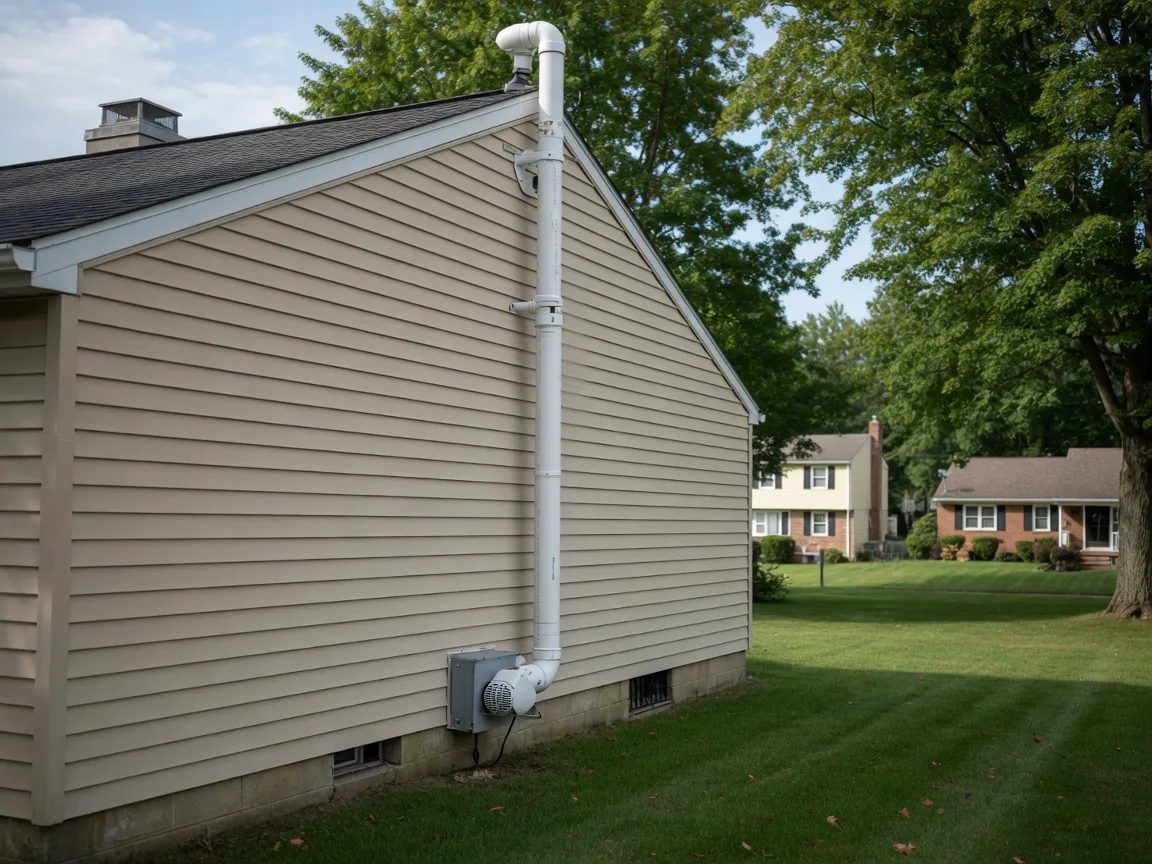
- Know the fix if levels are high. Mitigation, usually a sub-slab depressurization system with a vent pipe and fan, typically reduces radon well below the action level. It is a routine, proven fix.
Good news for local homeowners: the Burlington County Health Department has distributed free radon test kits to county residents during National Radon Action Month in January. Check with the county health department for current availability. If your result is 4.0 pCi/L or higher, the EPA and NJDEP recommend mitigation, because most follow-up tests confirm the elevated reading.
What Are New Jersey's Smoke Detector Requirements?
New Jersey's Uniform Fire Code is specific about where smoke alarms must live. Every level of a one- or two-family home needs one, including the basement and any finished attic, and at least one alarm must sit outside each sleeping area. Crawl spaces and unfinished attics are the exceptions. Wall units mount within twelve inches of the ceiling; ceiling units can go anywhere.
- Use hardwired or 10-year sealed-battery alarms. Both are acceptable under the code, listed to ANSI/UL 217. A hardwired system cannot be converted to battery-only.
- Replace alarms by age ten, not by how they look. Detectors lose sensitivity as sensors degrade. If you cannot remember when yours were installed, check the manufacture date printed on the back.
- Test monthly, replace batteries annually. Ten-second check every month beats discovering a dead alarm in an emergency.
Does My Mount Laurel Home Need a Carbon Monoxide Detector?
For virtually every Mount Laurel home, yes. New Jersey requires CO alarms in any dwelling that contains a fuel-burning device or fireplace, or that has an attached garage. That covers the gas furnace, gas water heater, gas range, gas dryer, or wood fireplace found in most homes in Ramblewood, Barclay, Springdale, and every other neighborhood here.
CO alarms must be installed within ten feet of each sleeping area, and they can be battery-operated or plug-in units listed to UL 2034. Combination smoke and CO detectors are a great option because one ceiling unit covers both requirements. Mount Laurel's winters mean heaters and fireplaces run for months, and a working CO alarm is the only warning against an odorless gas that causes flu-like symptoms, confusion, and worse.
One warning that applies every heating season: never run a generator, grill, or any fuel-burning equipment inside a garage, basement, or enclosed porch. Generators used during power outages are the classic source of deadly CO buildup in otherwise safe homes. Keep them outdoors and away from windows and doors.
How Do You Prepare Your Home for a South Jersey Winter?
Safety is seasonal, and in South Jersey the season that needs the most attention is winter. Some tasks overlap with the deeper autumn chores in our fall home maintenance checklist, but these are the operational items that matter once the temperature drops.
- Protect pipes before the first hard freeze. Disconnect hoses, insulate exposed lines in basements and garages, and know where your main water shut-off valve is. If temperatures will not climb above freezing, let faucets drip and open under-sink cabinet doors so warm air reaches the pipes.
- Keep the heat on when you travel. Set the thermostat no lower than about 55 degrees. Frozen and burst pipes are the most common winter disaster in Mount Laurel, and they are almost always avoidable.
- Test your sump pump before snow melt arrives. A battery backup keeps the pump working during the power outages that come with nor'easters. Pour a bucket of water into the pit to confirm the float switch trips.
- Stock a true emergency kit. Flashlights, batteries, blankets, bottled water, a hand-crank or battery radio, and a phone power bank keep a storm without power manageable.
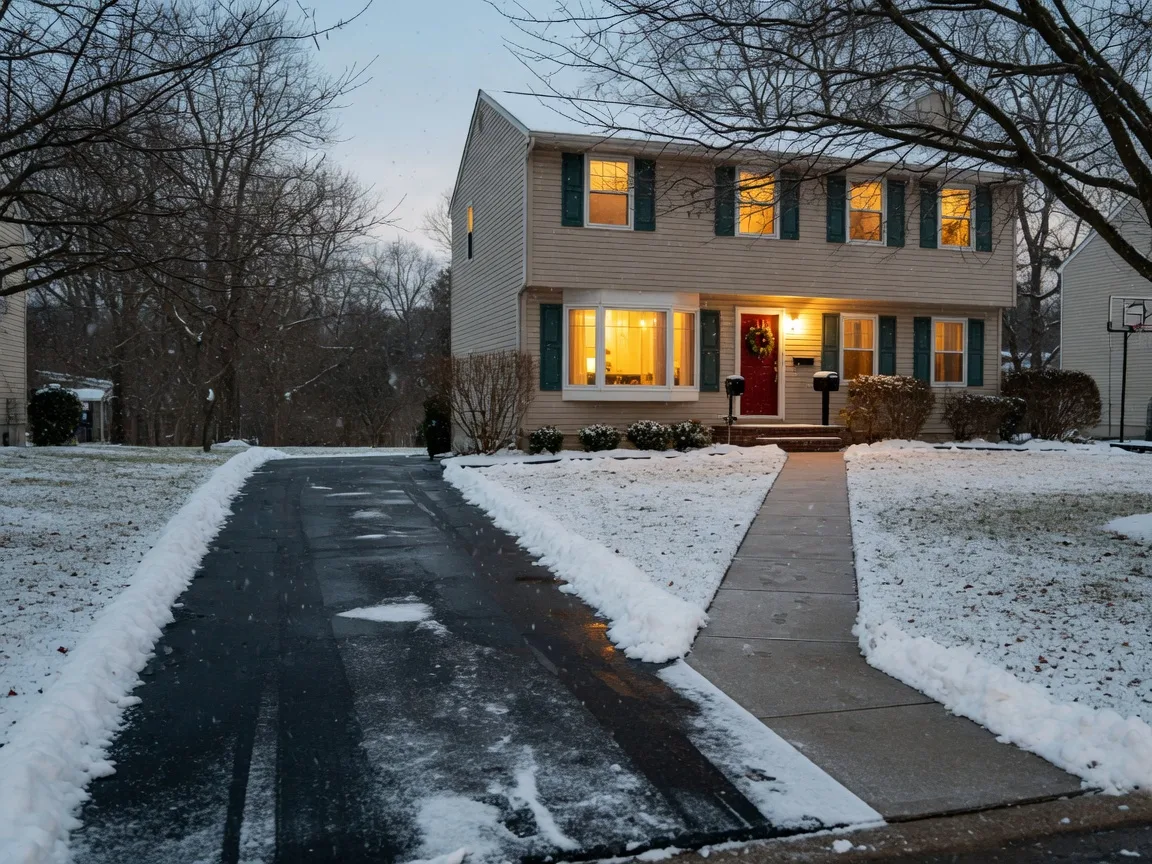
- Plan for ice, not just snow. Keep ice melt and a shovel by the door, and clear walkways promptly. A safe approach to your front door matters for daily life and for anyone who visits.
Mount Laurel winters bring real storms, and many homes depend on electricity for heating systems, well pumps in outlying areas, and sump pumps near Mill Creek and the township's stream corridors. A little winter preparation keeps a snowstorm an inconvenience instead of an emergency.
Which Checks Matter Before You Sell a Mount Laurel Home?
New Jersey treats detector compliance as part of the sale. Before a one-family or two-family home changes hands, the local enforcing agency inspects and certifies that smoke and CO alarms are installed and working, and a certificate of occupancy will not be issued for a home with a fuel-burning appliance or attached garage unless CO alarms are present and no more than ten years old.
Radon is also part of the transaction picture. The NJDEP recommends testing in any real-estate transaction, and when a test is done as part of a home sale it must be performed by an NJDEP-certified professional rather than a DIY kit. A clean result is a meaningful negotiating asset, and a high result discovered early leaves time for mitigation.
Buyers in Mount Laurel consistently ask about these items during inspections, especially in older sections of town. If you are preparing to list, addressing detectors, radon, and winter-readiness up front saves the kind of renegotiation no seller enjoys. Our step-by-step Mount Laurel selling guide covers the full timeline, and the township's real-estate pages list the required inspections in order.
Frequently Asked Questions
How common is radon in Mount Laurel, NJ?
Radon is a real concern here. Burlington County is an EPA Zone 2 area, and user-submitted test data show average readings around 4.7 pCi/L in Mount Laurel and 5.2 pCi/L county-wide, at or above the EPA action level of 4.0 pCi/L. The NJDEP recommends that all New Jersey homeowners test regardless of the zone map.
How do I get a radon test kit for my Mount Laurel home?
Kits are sold at hardware stores and online, and the Burlington County Health Department has distributed free kits to county residents during National Radon Action Month in January. Place the kit in the lowest livable level, keep windows and doors closed for twelve hours before and during the test, and follow the kit instructions exactly.
Are smoke detectors required on every floor in New Jersey?
Yes. New Jersey requires smoke alarms on every level of a one- or two-family home, including the basement and finished attic, plus at least one outside each sleeping area. Crawl spaces and unfinished attics are exempt. Alarms may be hardwired or 10-year sealed-battery units listed to UL 217.
Does every Mount Laurel home need a carbon monoxide detector?
Nearly every one. New Jersey requires CO alarms in any dwelling with a fuel-burning device, fireplace, or attached garage, which covers most homes here. Install UL 2034 listed alarms within ten feet of each sleeping area. A combination smoke and CO unit covers both requirements.
What should I do if my radon test comes back above 4.0 pCi/L?
The EPA and NJDEP recommend mitigation, and about 80% of follow-up tests confirm an elevated initial short-term reading. The standard fix is a sub-slab depressurization system, a vent pipe and fan that pulls soil gas out from under the foundation and safely exhausts it above the roofline.
Do I need a radon test when I sell my Mount Laurel home?
Radon testing is recommended during any real-estate transaction, and when a test is done as part of a New Jersey home sale it must be performed by an NJDEP-certified professional. A documented clean test strengthens your position, and early mitigation keeps a high result from becoming a negotiating problem.
How do I keep my pipes from freezing in a South Jersey winter?
Disconnect hoses and insulate pipes in unheated basements, garages, and crawl spaces. During hard freezes, let faucets drip and open cabinet doors so warm air reaches the lines. If you travel, keep the thermostat at about 55 degrees or higher, and know where your main shut-off valve is.
Turn Safety Into a Habit, Not a Chore
You do not have to do everything this weekend. Pick the highest-value items first: a radon test kit, new batteries in every detector, and a confirmed shut-off valve for the water supply. Then work through the winter prep as the weather turns. Homes in Mount Laurel reward owners who stay a step ahead, and the peace of mind is worth far more than the cost of the checklist.

Bob Millaway
Epique Realty Agent · AI Certified Agent
I help Mount Laurel homeowners understand, protect, and grow the value of their homes. If you have questions about your property, your neighborhood, or the local market, call me at 856.426.1522 or send a message.