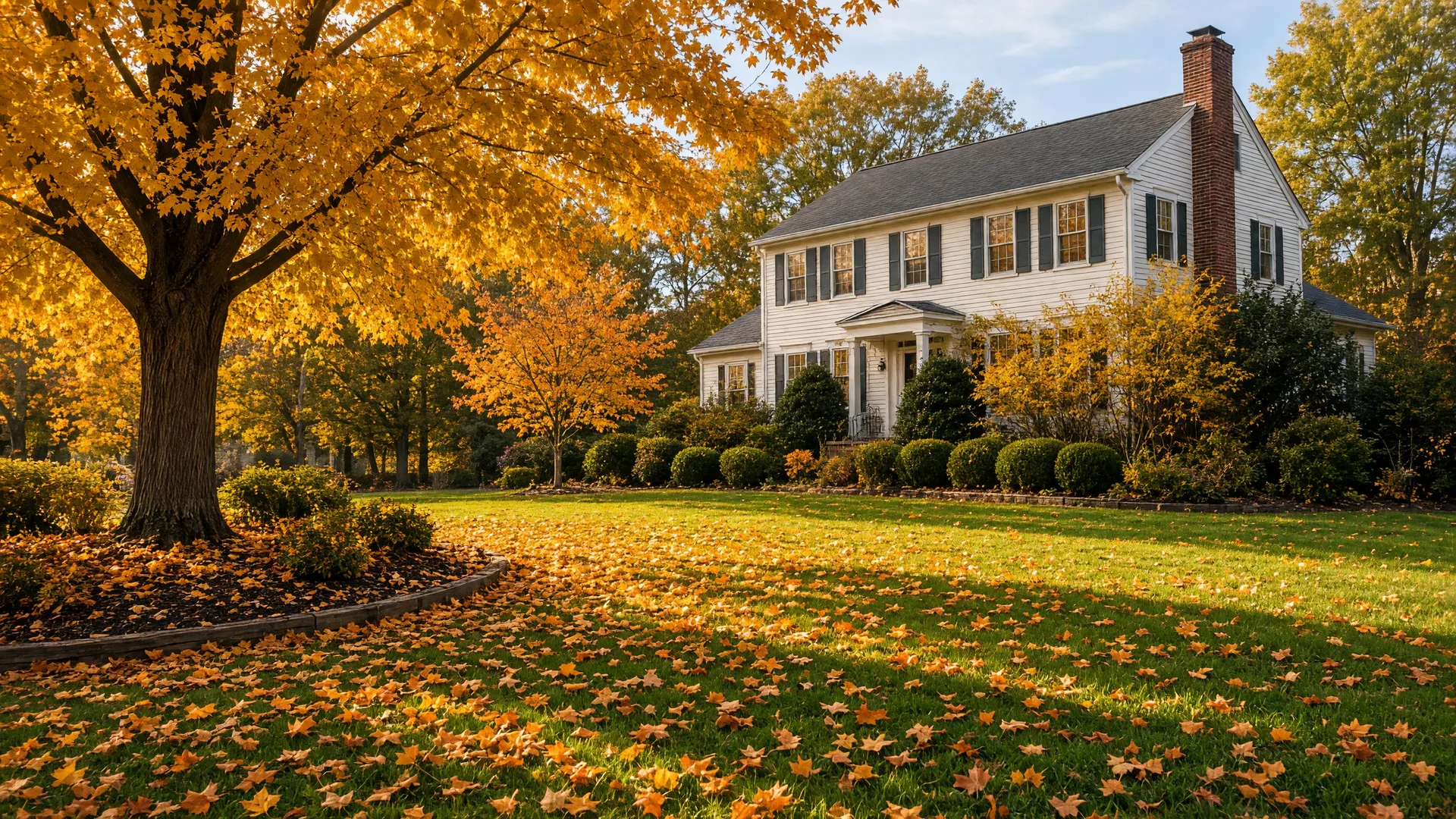
A great lawn is one of the first things a Mount Laurel buyer notices, and one of the most visible signs that a home has been cared for. The town's mature trees and deep residential lots, from Ramblewood to Holly Hills, give lawns room to shine, and also a lot of leaves, shade, and weather to handle. This guide walks Mount Laurel homeowners through the seasonal lawn care that actually matters in South Jersey, from the November fertilizer ban to the township's leaf collection.
A few local ground rules shape every lawn decision here. Mount Laurel sits on the Coastal Plain, so the soil runs sandy in places and clay-heavy in others, and it is naturally on the acidic side. New Jersey also has one of the strictest fertilizer laws in the country. Get those basics right and the rest is routine, not guesswork. It is the seasonal companion to our fall home maintenance checklist and winter home maintenance guide.
NOV 15
NJ Fertilizer Application Ban Begins
3.2 LBS
Max Nitrogen Per 1,000 Sq Ft Per Year
25 FT
Fertilizer Buffer From Water Bodies
OCT–JAN
Mount Laurel Leaf Collection Season
Why Does Lawn Care Matter in Mount Laurel?
In a town where the median home sells for $377,400, the exterior is what makes the first impression. A healthy lawn signals that the roof, the grading, and the drainage are probably in good shape too. Mount Laurel's neighborhoods are deeply green, with mature oaks and maples lining streets in Springdale, Barclay, and the Country Club sections, so a patchy lawn stands out more here than in a newer, treeless development. Buyers walking a home on Fellowship Road or Route 38 notice the difference in minutes.
South Jersey lawns also take a beating: heavy summer humidity, droughty Augusts, and cold, wet winters. A lawn that is mowed, fed, and overseeded on a South Jersey schedule comes through each season stronger, which means fewer weeds, fewer bare patches, and less money spent on fixes later. Our Mount Laurel neighborhood guide shows how outdoor space varies from the bigger lots in Country Club to the tighter yards in Southgate, and lawn care scales to all of them.
What Does the New Jersey Fertilizer Law Say About Feeding Your Lawn?
New Jersey's Fertilizer Law (P.L. 2010, c. 112) is the single most important rule for Mount Laurel lawns, because the application ban starts on November 15. Homeowners may not apply fertilizer containing nitrogen or phosphorus between November 15 and March 1. A fertilizer that contains only potassium or other non-nitrogen, non-phosphorus nutrients is still allowed during the ban, but most bagged lawn foods are off the table until spring.
- Watch the nitrogen cap. No more than 0.9 pound of total nitrogen per 1,000 square feet per application, including 0.7 pound of quick-release water-soluble nitrogen. At least 20% must be slow-release.
- Respect the yearly limit. No more than 3.2 pounds of total nitrogen per 1,000 square feet per year. That rules out the old habit of feeding every six weeks all season.
- Skip phosphorus unless you need it. Homeowners can apply phosphorus only to a newly established lawn in its first growing season, or when a soil test shows a deficiency. Where allowed, cap it at 0.25 pound per 1,000 square feet.
- Keep buffers near water. Do not apply fertilizer within 25 feet of any water body, or within 10 feet with a drop spreader or a deflector-equipped rotary spreader. That matters for Mount Laurel homes near Rancocas Creek and the ponds around town.
- Never apply before rain or on frozen ground. Fertilizer on sidewalks, driveways, or saturated soil ends up in storm drains. Sweep any granules off hard surfaces back onto the lawn.
The law exists because fertilizer runoff feeds algae in the Delaware River watershed and the bays downstream. Mount Laurel's storm drains empty into creeks that reach those waters, so the buffer rule is a real local responsibility, not paperwork. When spring rolls around, our energy and home savings guide covers the other big way to keep recurring home costs down.
When Is the Best Time to Aerate and Overseed a Mount Laurel Lawn?
Late summer into early fall, roughly mid-August through mid-October, is the strongest window for aerating and overseeding in South Jersey, and September is the sweet spot. Warm soil, cooling air, autumn rainfall, and at least six weeks of growth before the first hard freeze all line up in that window. It is the single best habit a Mount Laurel homeowner can build, because it is what turns a tired lawn into a thick one.
- Core aerate before you seed. A plug aerator pulls cores of compacted soil and opens channels so seed reaches the soil, essential in South Jersey's clay-heavy pockets. Aerate the same day you overseed.
- Seed tall fescue. Turf-type tall fescue is the dominant cool-season grass in New Jersey, with deep roots and solid heat and drought tolerance. Many lawns mix in Kentucky bluegrass or perennial ryegrass for self-repair.
- Test your soil first. New Jersey soils are naturally acidic, and lawns grow best around a pH of 6.0 to 6.5. The Rutgers Cooperative Extension lab in Burlington County will test a sample for a small fee and tell you how much lime you need.
If you missed the fall window, late winter into early spring works too, though fall seeding gives seed a full season before summer stress. New seed needs consistent moisture for about three weeks, so factor the watering in before you spread a bag.
How Do I Use Mount Laurel's Leaf Collection Program?
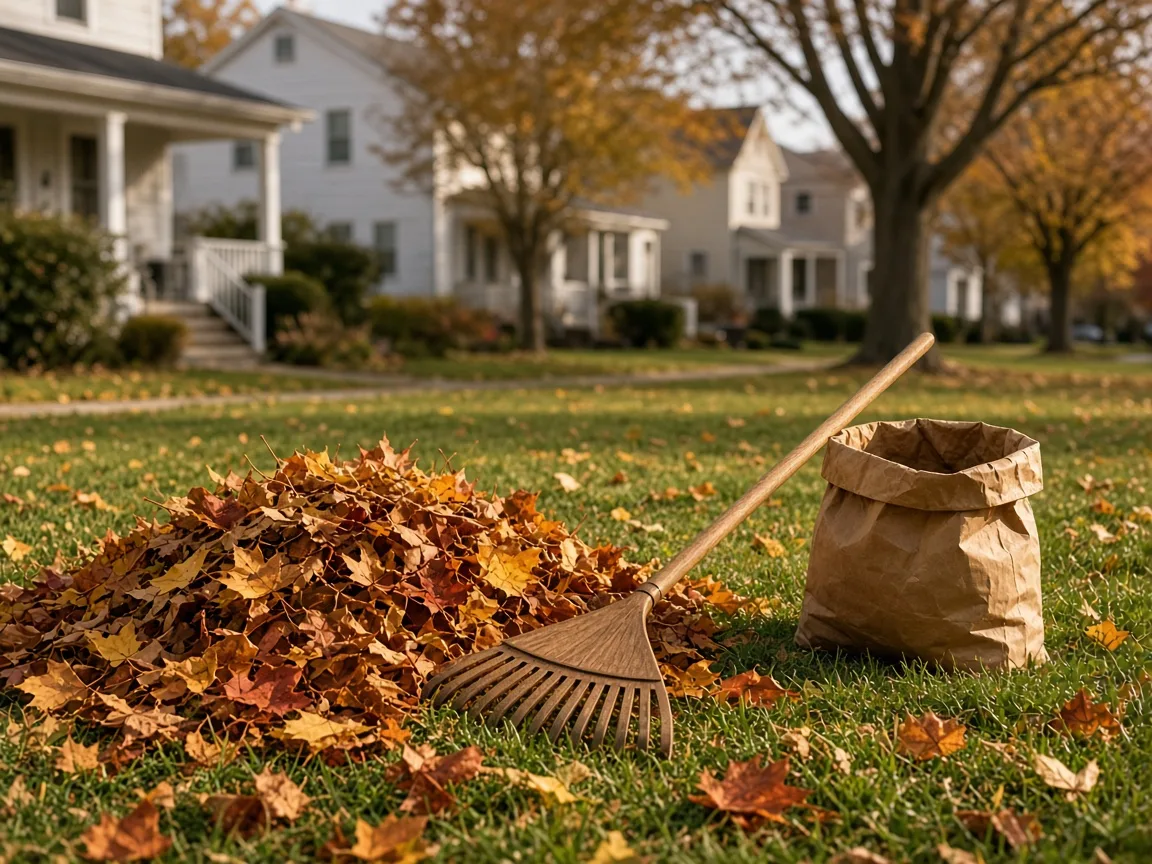
Mount Laurel's Public Works department runs a scheduled curbside leaf collection from October through January, accepting both loose and bagged leaves. The township divides into sections, posts signs before collection begins, and picks up leaves placed at the curb, with no need to call in. It is one of the most useful programs a Mount Laurel homeowner has, because mature trees across Ramblewood, Springdale, and Holly Hills drop a huge volume of leaves each fall.
- Keep piles 10 feet from storm drains. Leaves that wash into a drain clog the system and can flood the street. The township explicitly asks for the buffer.
- Leaves only. Branches, brush, and grass clippings do not belong in the pile. Check the Public Works page or call (856) 234-0001 ext. 1241 for the current schedule.
- Do not blanket the lawn in leaves all winter. A heavy mat of wet leaves smothers the grass and invites snow mold. Mulch light layers with the mower or rake to the curb, but do not leave the yard covered.
For homeowners who would rather not rake, Mount Laurel has plenty of local help. Diamond Lawncare on Texas Avenue, Jersey Lawn Care on Country Club Parkway, and Larkin Landscaping on Church Road all serve the area. Get on their schedules early, because the November weeks book out fast.
How Should I Mow and Water in South Jersey?
Mowing height and watering habits matter more in South Jersey's hot, humid summers than in cooler climates, because the grass is already under stress. Keep these simple rules and the lawn stays ahead of the weeds.
- Mow tall in summer. Keep cool-season grass around 3 to 3.5 inches in the heat. Taller grass shades its own roots, holds moisture, and crowds out weeds. Drop to about 2.5 to 3 inches in spring and fall.
- Never cut more than a third. If the lawn got away from you, raise the deck and mow again in a few days rather than scalping it in one pass, which weakens the crown and invites crabgrass.
- Water deeply and rarely. About 1 inch per week, including rain, is plenty. Water early in the morning so the blades dry before evening, which cuts down disease.
- Let established lawns go dormant in a dry August. They recover fine in September. During declared droughts, New Jersey towns can impose odd-even watering rules, so check Mount Laurel alerts.
A lush green lawn in July is not always a sign of health, and a brown lawn in August is not always a problem. A home inspection and a walk of the grading matter far more than the color of the grass. Our Mount Laurel real estate data shows why well-maintained exteriors hold their value.
What Should I Do With My Lawn in November and Winter?
November is a quiet month for lawns, and that is fine. The fertilizer ban starts November 15, leaf collection is running, and the grass is heading into dormancy. The important jobs now are mostly protective.
- Keep mowing until growth stops. A shorter final cut, around 2.5 inches, prevents matting under snow and reduces vole damage.
- Get the leaves off the grass. Rake, blow, or mow-mulch them into the township's collection. A clean lawn going into winter is a healthy lawn in spring.
- Avoid heavy traffic on frozen or saturated turf. Ruts left by driving on a wet lawn in January take all spring to heal.
- Hold the spring feeding until the ban lifts. March 1 is the earliest homeowners can apply nitrogen again. Many lawns are better served by a soil test and one well-timed feeding than by a calendar full of applications.
Winter asks little of the lawn but a lot of the rest of the house. Frozen pipes, ice dams, and snow loads do not wait for spring, so pair your lawn shutdown with our winter home maintenance guide and get the whole property ready before the first freeze.
Frequently Asked Questions
When is the NJ fertilizer application ban in effect?
Homeowners may not apply fertilizer containing nitrogen or phosphorus between November 15 and March 1 each year. Fertilizers with only potassium or other non-N/P nutrients are still allowed during the ban.
How much fertilizer can I apply to my Mount Laurel lawn per year?
New Jersey caps homeowners at 3.2 pounds of total nitrogen per 1,000 square feet per year, with no more than 0.9 pound per application and at least 20% slow-release. Phosphorus is limited to new lawns or soil-test-confirmed deficiency.
Does Mount Laurel pick up leaves at the curb?
Yes. Mount Laurel Township runs scheduled curbside leaf collection from October through January for both loose and bagged leaves. The town posts section signs before pickup, and piles must stay at least 10 feet from storm drains.
When should I overseed my lawn in New Jersey?
Late summer to early fall, roughly mid-August through mid-October, with September the strongest window. Core aerate first, then seed turf-type tall fescue, the dominant cool-season grass for South Jersey.
What grass type grows best in Mount Laurel?
Turf-type tall fescue is the most recommended cool-season grass for New Jersey because it tolerates heat and drought. It is often blended with Kentucky bluegrass or perennial ryegrass for self-repair.
What soil pH do Mount Laurel lawns need?
New Jersey soils are naturally acidic, and cool-season lawns grow best around a pH of 6.0 to 6.5. A Rutgers Cooperative Extension soil test tells you exactly how much lime to add.
How often should I water my lawn in the summer?
About 1 inch per week, including rain, is enough for an established lawn. Water early in the morning, and skip the sprinkler when the lawn goes dormant in a dry August, it will recover in September.
Build a Lawn Routine, Not a Rescue Plan
The best Mount Laurel lawns are the product of a quiet annual rhythm: aerate and overseed in September, rake to the curb during leaf season, mow tall through summer, feed within the law, and let the lawn rest in winter. Follow the NJ rules, use the township's leaf program, and test your soil once, and your front yard will make the neighborhood look its best.

Bob Millaway
Epique Realty Agent · AI Certified Agent
I help Mount Laurel homeowners understand and protect the value of their homes. If you have questions about your property or the local market, call me at 856.426.1522 or send a message.